Listing on the Ridge After the Fourth: What Phinney's Split Median Is Telling Sellers Right Now
July 16, 2026
July 16, 2026
If you pulled up three different home value estimates for Phinney Ridge this spring, you saw three different neighborhoods. One source put the median near $1.4M and moving in under a week. Another put it at $1.1M with two weeks on market. A third had the average home value sliding backward year over year. All three are drawing from the same MLS.
That gap is not a rounding error. It is the most useful piece of market intelligence a Phinney seller has right now, because it tells you which version of the neighborhood your specific house belongs to before you set a price.
The neighborhood is not one market. It is at least three, stacked on the same ridge, and the Fourth of July calendar decides which one your buyer is shopping in.
Here is what the public trackers show as of the last reported month.
| Source | Reported median or ZHVI | Days on market | Year over year |
|---|---|---|---|
| Redfin, March 2026 | $1.4M | 6 days | up 5.8% |
| Homes.com, May 2026 | $1,100,000 | 14 days | up 11% trailing 12 mo. |
| Zillow ZHVI, April 2026 | $1,055,167 | n/a | down 6.2% |
For context, the city of Seattle reported a $879K median over the three months ending May 2026, down 2.3% year over year, with roughly 10 days on market. Phinney is outperforming the city on almost every read, but the reads themselves disagree by close to $350,000.
The reason is composition. Redfin's monthly figure is a small sample of closed transactions and skews toward whatever mix sold that month. In a month heavy on renovated Craftsmans and new construction, the number jumps. Homes.com's trailing figure smooths that out. Zillow's ZHVI is modeled across the entire housing stock, including the unrenovated bungalows that rarely change hands. When those three numbers spread apart, you are not looking at a broken market. You are looking at a housing stock that has quietly split into tiers.
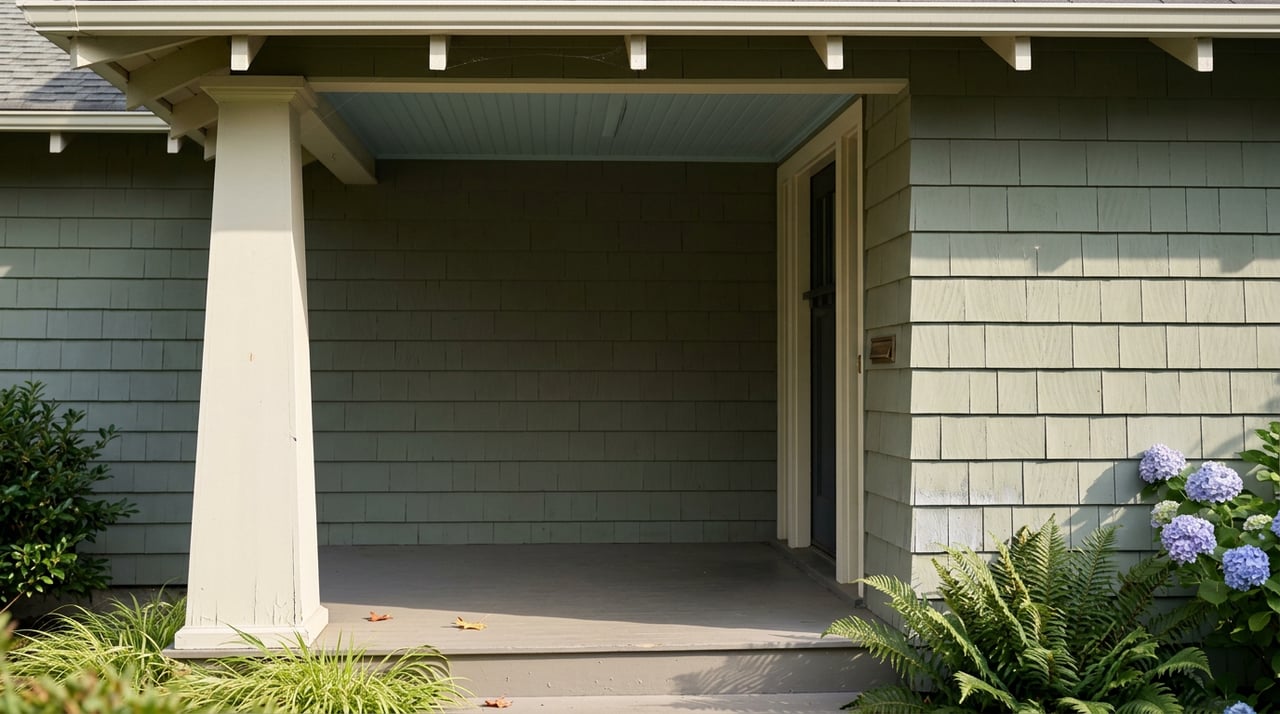
Walk Greenwood Avenue from 65th to 85th and the vintage stack is easy to see. Early twentieth-century Craftsman bungalows sit next to 1940s and 1950s cottages, which sit next to 2020s townhomes like the four-story builds off Green Lake with ten-foot ceilings and triple-paned bedroom windows. The RapidRide E Line runs the western edge on Aurora, feeding demand from downtown commuters. Woodland Park Zoo, the ZooTunes summer series, WildLanterns in winter, the Phinney Farmers Market, and the PhinneyWood Art Walk pull weekend traffic that buyers register as walkability before they can articulate it.
The buyer for the $1.9M renovated Craftsman with the view corridor over the Olympics is not the buyer for the $780K unrenovated three-bedroom two blocks away. They are shopping in the same zip code and reading the same portal, but they are pricing off entirely different comps. When you list, you are choosing which of those buyers gets your address in their alert feed. That choice is made by your list price, your prep budget, and your launch date, in that order.
Seattle's early July slowdown is real and predictable. Listing agents citywide spent the last two weeks of June racing to get inventory in front of buyers before the long weekend, because historically the market goes quiet from July 4 through roughly the third week of the month. Family travel, camp schedules, and the general drift of a Seattle summer pull buyers off the portals.
Most sellers read that pattern as a reason to list in June or wait until September. Both are defensible. What gets missed is the window in between: late July through mid-August, when inventory that launched in June has either sold or gone stale, and the buyers who spent the Fourth at Lake Chelan are back at their laptops with fewer fresh options to compare against. A well-prepped Phinney listing that hits the market on a Thursday in the last week of July is often the newest thing a serious buyer has seen in a month. That scarcity is worth more than the extra foot traffic of a June launch on a crowded street.
The trap is launching stale. If your house sat through June with two price reductions and one canceled offer, relisting in late July will not reset the buyer perception. New photography, new staging, and ideally a week fully off the MLS before the relaunch are the minimum. This is where a lot of would-be second-window sellers give back the advantage.
The three-tier price spread maps almost exactly onto three prep conversations. Here is what actually surfaces during a Phinney pre-listing walk-through.
These are the homes carrying the neighborhood's identity and, when done right, the top of the price band. They are also the homes most likely to trigger inspection friction.
The prep move here is a pre-inspection two to three weeks before photos. Not to fix everything, but to know what is coming so your pricing and disclosure package tell one consistent story.
This is the largest tier by volume and the one most affected by the Zillow ZHVI decline. Buyers at this price point have the most substitutes across Greenwood, Green Lake, and North Ballard, and they are the quickest to walk on a house that feels half-done.
The top of the price band, but not automatically the fastest sale. Buyers at this tier expect finish quality that matches the price. Small issues stand out.
The Redfin figure of six median days on market and the Homes.com figure of fourteen are both accurate, and they describe two different seller behaviors. Homes that price at or slightly below the top comp for their tier, launch on a Thursday, and hold offers to a set review date are the six-day sales. Homes that price to what the seller wants to net, wait for the market to catch up, and take a reduction after eleven days are the fourteen-day sales. The neighborhood absorbs both. Your equity outcome depends on which behavior you choose before the sign goes in the yard.
The city-level year-over-year softening of 2.3% is the ambient condition. Phinney's outperformance is not a promise that discipline is optional. It is evidence that buyers here are still willing to reward the sellers who did the work, and less willing than they were in 2022 to reward the sellers who did not.
Is it too late to prep a Phinney home for a 2026 sale? No. A home going into prep in mid-July can realistically hit the market between late July and early September, which covers the strongest remaining window of the year before the fall lull.
Does an unrenovated Craftsman still sell here? Yes, and often quickly, but the buyer pool shifts toward builders and investors underwriting to renovation cost. Pricing to that buyer, rather than to a renovated comp, is what determines whether the sale closes.
How much of the year-over-year decline in Zillow's ZHVI applies to my specific home? Very little, if your home has been meaningfully updated in the last five years. The ZHVI is dragged down by the long tail of unrenovated stock. A CMA on your specific vintage and finish level will read closer to the Redfin monthly figure than the modeled index.
If you are weighing a late-summer listing on the ridge and want a walk-through that ties prep, pricing, and launch date to your specific house rather than to the neighborhood median, Brooke Davis is glad to sit down and talk through it. Let's Connect.


Her passion is helping clients achieve their homeownership goals, from a home seller looking to upgrade or relocate to a first-time buyer and a seasoned investor looking to build their financial portfolio. Brooke will guide and advocate for you through the entire process from beginning to end. Contact her today!