How Broadview Tree Permits Can Affect a Seattle Sale
July 23, 2026
July 23, 2026
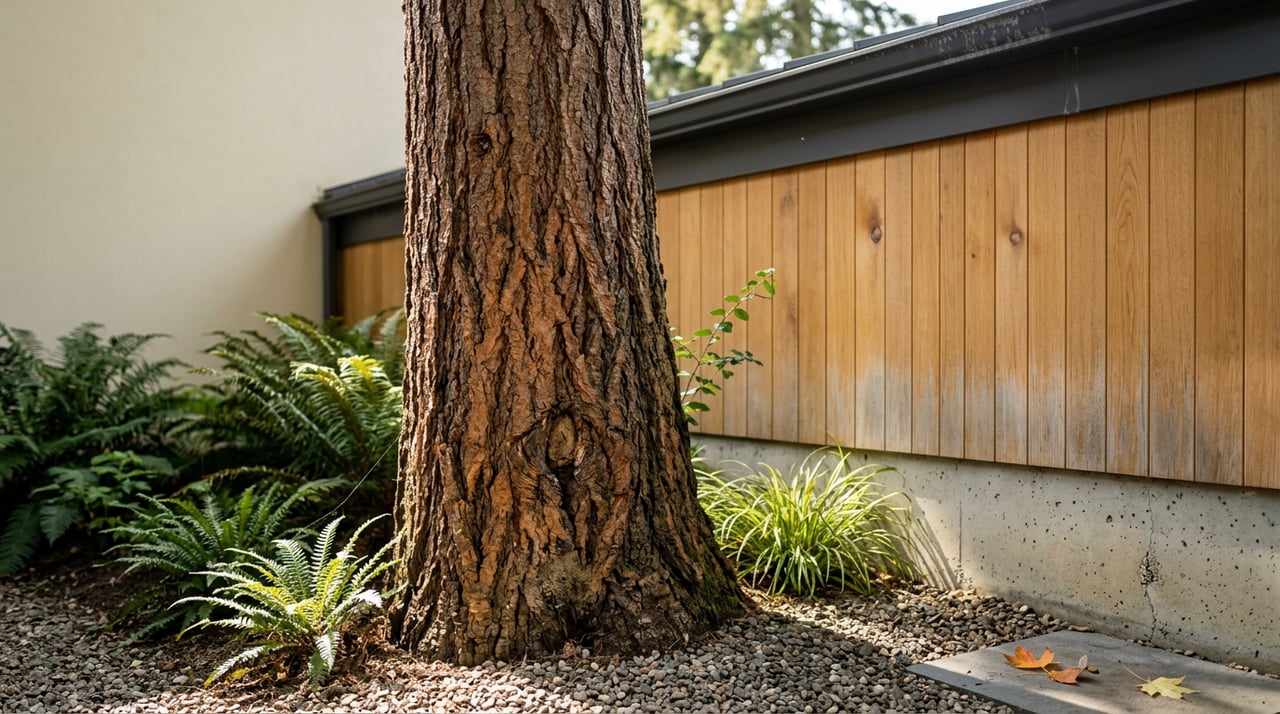
A mature Douglas fir on a Broadview lot used to be a landscaping decision. As of January 21, 2026, it is a permit decision, a disclosure decision, and in some cases a pricing decision. The shift is quiet enough that most sellers only meet it when a buyer's inspector asks the wrong question during the response period.
Broadview carries this weight harder than most Seattle neighborhoods. The lots are larger, the tree cover is older, and the value story on the west side of the ridge often depends on either a view corridor or a redevelopable footprint. Both of those stories now run through Chapter 25.11 of the Seattle Municipal Code before they run through the MLS.
Seattle's tree protection regulations were updated by Ordinance No. 127300, effective January 21, 2026, with revisions to SMC Chapter 25.11 related to the tree protection area. The change matters more than its administrative language suggests. The "basic tree protection area" was deleted from the code, and subsections 25.11.060.A.3 and .4 now outline the reductions and modifications used to determine the tree protection area, which is used both to decide whether Tier 2 trees may be removed in Neighborhood Residential and Lowrise zones and to protect retained trees during construction.
Translated: on a Broadview parcel where a builder-buyer's underwriting depends on a specific footprint, the tree math is now the footprint math. A seller who prices in "development potential" without an arborist walk is pricing in an assumption that a Tier 2 tree does not sit inside the calc.
The 2023 restructure that this ordinance sits on top of moved Seattle away from the old exceptional/non-exceptional binary and toward four tiers. Trees in Seattle are now categorized into Tier 1, Tier 2, Tier 3, and Tier 4, replacing the exceptional and non-exceptional categories of the prior code, with each tier carrying different regulations depending on whether development is proposed, and trees measured by diameter at standard height.
Tier 1 captures heritage-designated trees. Rare on a residential lot, but if you have one, treat it as a fixed feature.
Tier 2 is the tier that changes Broadview sales. Tier 2 includes trees 24 inches DSH or greater, tree groves, and specific tree species designated in Director's Rule 7 of 2023. A single mature Douglas fir or western red cedar on a Broadview view lot will typically land here, and a stand of eight or more touching-crown trees becomes a grove regardless of individual size.
Tier 3 covers trees from 12 up to 24 inches DSH that aren't Tier 1 or 2. Tier 4 covers 6 up to 12 inches. Removal of any tier is generally prohibited on undeveloped or vacant lots, exceptions exist for hazardous trees with SDCI approval, and trees under 6 inches DSH are not regulated by SMC 25.11.
The line most sellers miss is the one about developed lots. Removal is generally prohibited across all tiers and zones when no development is proposed on either developed or undeveloped land, though the regulations include exemptions and allowances such as invasive species removal or removal of trees infected with pests or pathogens. A homeowner cannot, in other words, quietly clear the view before listing and treat the paperwork as optional.
Three specific scenarios show up over and over on the ridge, and each one lands in the transaction rather than in the pre-listing prep.
The view-tree ask during inspection response. A buyer's agent writes into the inspection response that the two firs blocking the Olympic sightline should be topped or removed before closing. On a developed lot without a construction record, that request runs into the SMC 25.11 prohibition. Even where a hazard argument exists, SDCI review is not fast enough to close inside a standard contingency. Sellers who accept the ask blind have opened a re-trade instead of resolving one.
The redevelopment underwriting problem. A builder-buyer offers on a corner lot on the assumption of an 85% development footprint. The tree protection regulations use a development capacity calculation to determine if Tier 2 trees may be removed on sites undergoing development in Lowrise zones, with an allowable development area of 85 percent used instead of floor area ratio, and Tier 2 trees may be removed if the 85 percent allowable development area cannot be achieved without extending into the basic tree protection area. The January 2026 ordinance replaces the "basic" tree protection area with the modified 25.11.060.A.3–4 calc, and a Tier 2 fir near a corner can compress that calc in ways the offer letter did not price.
The paperwork gap. Prior removals show up in SDCI's records. All tree public notices are available on the Tree Public Notice Map, per SDCI Tip 242D. A cleared corner without a matching notice is not a value-add on the listing sheet; it is a due-diligence flag on the buyer's side. Tree Service Providers who do not follow the tree code may be removed from SDCI's registry for one year, and both property owners and tree service providers may face financial penalties for tree code violations. The penalty exposure is real, and a sophisticated buyer will price it.
West-side Broadview lots that sit inside SDCI's Environmentally Critical Area layer for steep slopes carry a second overlay on top of the tier rules. That overlay lengthens review, tightens the reasons a removal may be approved, and turns hazard arguments into arborist-report exercises rather than same-week resolutions.
Practitioners tracking the current code report standard residential permit review at four to eight weeks, with exceptional-tree or ECA-parcel work running eight to twelve weeks or longer, and arborist reports for the higher tiers coming from ISA-certified professionals only. Those windows are longer than most Broadview inspection periods and most rate-lock windows. The sequencing has to move ahead of the listing, not into it.
For a Broadview seller with either a view story or a mature-tree lot, the pre-listing tree work is not a luxury add. It is the same category of work as a sewer scope and an oil-tank search: cheaper to resolve on your calendar than on the buyer's.
The sequence is intentionally boring. Boring is the point. Every step above moves a possible inspection-response item into the pre-listing file, where it can be priced calmly rather than negotiated under time pressure.
Can I top a fir on my own property to open a view before I list? Not without going through SDCI. SMC 25.11 limits the number, size, and type of trees that may be removed from a property, and Seattle regulates removal because trees are considered important for human and environmental health. Topping and heavy pruning can trigger the same review as removal for the higher tiers.
What if the tree is genuinely hazardous? There is a hazard pathway. It requires an ISA-certified arborist's assessment and SDCI review, and post-removal documentation is still required. The pathway exists; the shortcut around it does not.
Do these rules apply if the tree is between the sidewalk and the curb? Different agency. Whether a tree is on private property or in the right-of-way along a street determines which regulations apply, and most right-of-way street trees between the curb and sidewalk in residential neighborhoods are managed and cared for by the adjacent property owner. Right-of-way work runs through SDOT rather than SDCI, and the permitting is separate.
What is the exposure if a prior owner removed a tree without a permit? The penalty structure is meaningful. Unauthorized tree removal carries penalties including fines up to three times the tree's appraised value plus mandatory replacement plantings. If the removal predates the current ownership, the conversation is a disclosure and negotiation issue rather than a personal-liability one, but the parcel history remains part of the story a buyer will investigate.
Does the January 2026 change affect a home already under contract? Contracts written before January 21, 2026 that vested under the prior code language may fall under different provisions; that is a title and permit review question rather than a general answer. Any tree work being contemplated during a current inspection response should be routed through SDCI before the response is accepted.
Broadview's value is written into its lots more than its floor plans, and the code that governs those lots now reads differently than it did last winter. Sellers who move the tree conversation to the front of the timeline keep the offer clean; sellers who leave it for the response week end up negotiating against a permit calendar they cannot compress. If you are weighing a Broadview listing this year and the lot carries either a view or a mature canopy, Brooke Davis can walk the parcel with you before the sign goes up. Let's connect.

Her passion is helping clients achieve their homeownership goals, from a home seller looking to upgrade or relocate to a first-time buyer and a seasoned investor looking to build their financial portfolio. Brooke will guide and advocate for you through the entire process from beginning to end. Contact her today!