The View Premium in Broadview Has No Paper Trail Behind It
September 17, 2026
September 17, 2026
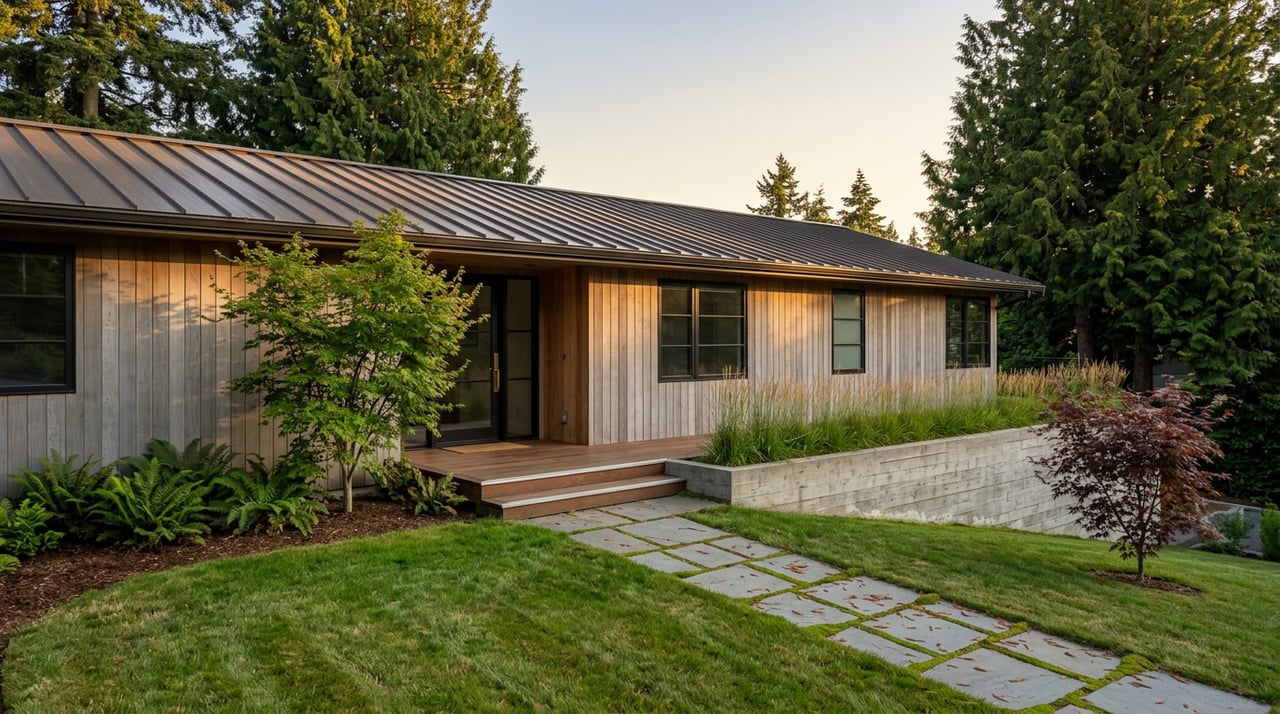
A buyer stands on a cedar deck off the back of a Broadview rambler, coffee in hand, looking west past a stand of Douglas firs to a strip of silver water and the jagged line of the Olympics behind it. The agent says something about how the light hits the Sound at this hour. The buyer starts doing the math on an offer that's forty percent above what the house two streets east, without the view, would fetch.
What nobody says out loud on that deck is the question that actually matters: what, exactly, did the last thirty years of tree growth and city policy have to do with the fact that this view still exists, and what happens if either one changes.
Broadview earned its name from the west-facing slopes above Puget Sound, where homes on the right streets catch open water and Olympic Mountain sightlines that most of north Seattle can't touch. That geography shows up directly in price. As of July 2026, Broadview listings have put standard single-family homes in the $850,000 to $1.4 million range, while comparable homes with a real Sound or mountain view have cleared $1.5 million and run past $2.5 million. The gap between those two numbers is the view premium, and it's a real, measurable slice of what a buyer pays.
What that premium doesn't buy is a guarantee. A listing photo of an unobstructed sunset is a snapshot of one afternoon, not a covenant that runs with the land. The tree line that frames that photo is alive, growing, and in most cases owned by someone else entirely.
This is the part that catches buyers who've shopped view homes in other states off guard. Washington has no statewide law that gives a homeowner a right to a view, to light, or to air. Unless a right has been spelled out in writing somewhere, through a covenant, a recorded easement, or a rare local ordinance, a neighbor is generally free to let a tree grow as tall as it wants, even directly in your sightline.
Seattle doesn't fill that gap with a citywide view ordinance either. Some coastal California cities and a handful of Pacific Northwest municipalities have adopted local rules that let a homeowner petition to have a view-blocking tree trimmed back. Seattle isn't one of them. For a Broadview buyer, that means the protection you're relying on has to already exist on the property, in a covenant, conditions, and restrictions document or a recorded view easement, or it doesn't exist at all. Most of Broadview's lots sit outside any homeowners association, which means most of them have no such document to fall back on.
The comparison is stark enough to put in front of a buyer before they write an offer:
| What a buyer assumes | What's actually true in Broadview |
|---|---|
| The photographed view is a fixed feature of the home | It's a current condition that can change as neighboring trees mature |
| The city or a nearby HOA will make a neighbor trim a blocking tree | Almost no Broadview lots carry an HOA with view language, and Seattle has no citywide view ordinance |
| A buyer can trim a neighbor's tree once it starts blocking the view | Only branches that cross the property line, and only without harming the tree |
| A partial-view lot can be built up later to capture more of the Sound | Only if the parcel isn't inside a steep slope critical area, and waterfront lots often can't use the city's relief process at all |
Even when a neighbor is willing to help, Seattle's own tree rules can get in the way. The city's 2023 Tree Protection Code, updated again this year, limits how many trees, and which ones, can be removed from private property regardless of who wants them gone. Trees above certain size thresholds are classified as significant or exceptional, and taking one down, or even substantially cutting it back, generally requires review and can trigger replacement requirements or fees.
Translate that into a Broadview scenario. A fir planted as a six-foot sapling in the 1990s along a property line is now sixty feet tall and sits squarely in a neighbor's water view. The current owner might be perfectly willing to have it topped or removed. Under the tree code, that decision may not belong to either homeowner alone anymore. The tree could qualify for protection that neither owner anticipated when the sapling went in.
For a buyer evaluating a partial-view lot, this cuts against the easy assumption that a little diplomacy and a chainsaw will eventually finish the job the current owner started. It might, or the tree in question might be exactly the kind of specimen the code was written to protect.
Broadview's best views sit on the same terrain that makes the city nervous about construction. Much of the bluff above Puget Sound falls inside Seattle's environmentally critical areas, and the city's default position on steep slopes is that new development is prohibited there unless a specific exemption applies.
Seattle does offer a process to seek relief from that prohibition, but the fine print matters here. Relief from the steep slope development prohibition does not apply to waterfront lots. For a buyer eyeing a Broadview parcel that sits close enough to the water to fall inside that shoreline classification, the standard workaround for building on a steep slope simply isn't on the table. Any project big enough to move more than 500 cubic yards of soil, disturb 5,000 square feet or more, or add 750 square feet of new hard surface can also trigger a separate grading permit, with additional review if the site sits within 200 feet of the Sound's ordinary high water mark.
The practical read for a buyer: don't assume that a modest view today can be upgraded into a full one tomorrow with a deck extension or a second story. On the wrong parcel, that path runs straight into a prohibition the city built specifically for this terrain, with no relief available because the lot happens to be exactly the kind of property that made the view valuable in the first place.
A few concrete steps, done before the offer goes in rather than after the inspection period starts, change how much of this risk a buyer is carrying:
None of this means a Broadview view home is a bad purchase. It means the view itself should be priced and negotiated as what it is: a current, valuable, but legally unprotected condition, not a fixed asset with a paper trail behind it. A buyer who understands that going in can ask sharper questions during the inspection period, weigh a partial view differently than a full one, and avoid paying full premium for a sightline that a "future view potential" listing description implies but the parcel's ECA status may never allow.
Does Seattle have a view ordinance like some coastal cities do? No. Washington has no statewide right to a view, and Seattle has not adopted a citywide view protection ordinance. Any protection has to come from a private agreement already recorded on the property.
Can I ask my neighbor to trim a tree that's blocking my Broadview view? You can ask, and plenty of neighbors will work with you. You have no legal claim to force it unless a written easement or CC&R already covers it, and any significant work on a large or protected tree may still need to go through Seattle's tree code review regardless of what the two of you agree to.
If I buy a lot with a partial view, can I add height later to improve it? Only if the parcel sits outside a steep slope critical area. If it's classified as waterfront, the city's relief process for steep slope development explicitly does not apply, so this is worth checking before you count on it as part of your long-term plan.
Understanding what you're actually buying on a Broadview view lot, and what the city and state will and won't back up once you own it, is the kind of groundwork worth doing before an offer, not after. If you're weighing a specific parcel and want a straight read on its ECA status, its tree situation, or how a partial view is likely to hold up over time, Brooke Davis has walked this exact terrain with Broadview buyers before. Let's Connect.

Her passion is helping clients achieve their homeownership goals, from a home seller looking to upgrade or relocate to a first-time buyer and a seasoned investor looking to build their financial portfolio. Brooke will guide and advocate for you through the entire process from beginning to end. Contact her today!